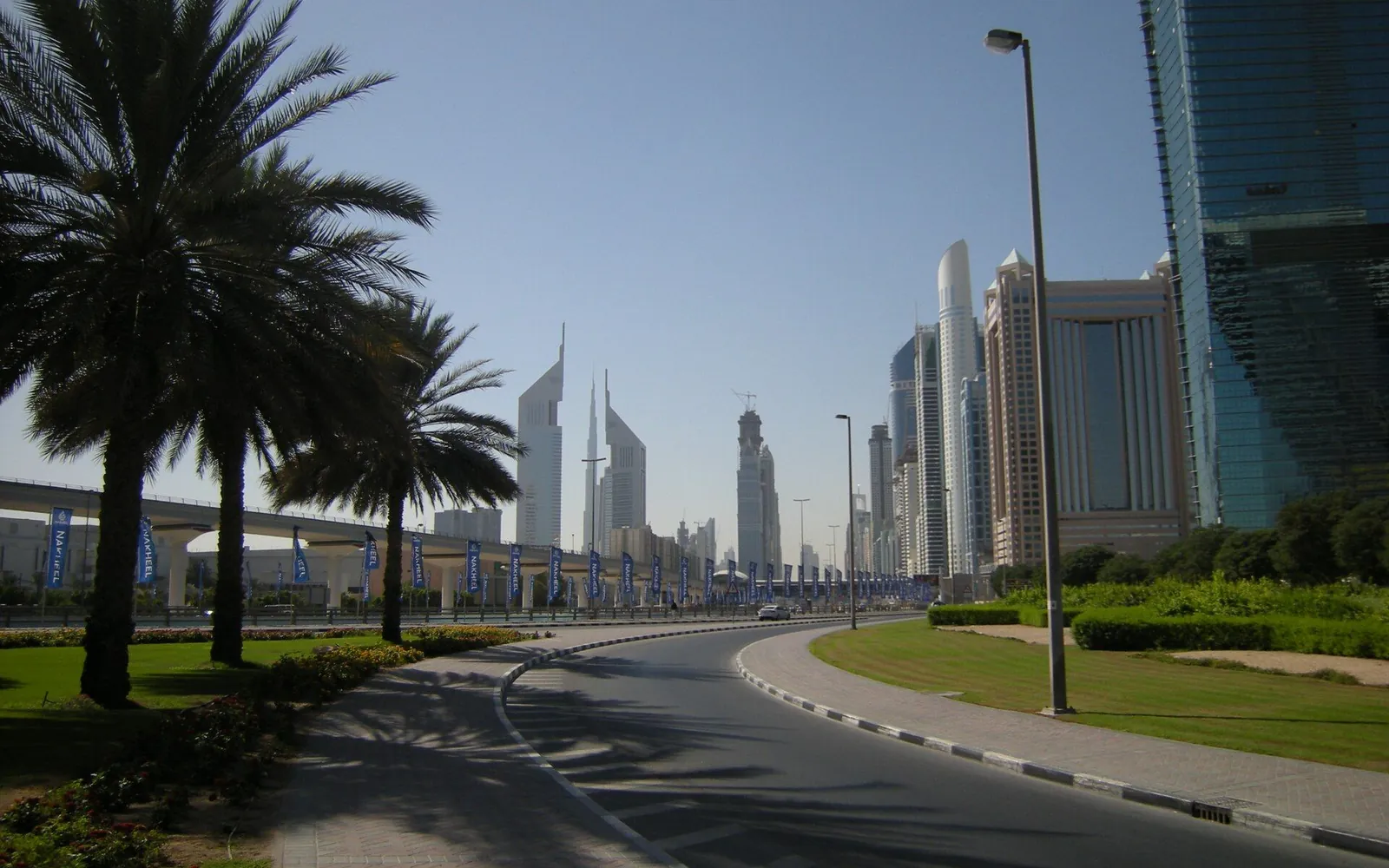
Dubai vs Singapore family office in 2026, and where the property sits
The DIFC asks a family office for USD 50 million of family net assets and ADGM lists USD 10 million, while Singapore's Section 13O fund scheme starts at SGD 20 million and its 13U scheme at SGD 50 million, according to MAS. The sharper difference is property: a foreign buyer of Singapore homes pays 60 per cent Additional Buyer's Stamp Duty, while Dubai's designated freehold areas carry a 4 per cent Land Department fee.

This article discusses regulation and costs that can change. Confirm current requirements with the relevant authority before acting.
The Dubai vs Singapore family office decision in 2026 starts with two published thresholds: the DIFC requires family net assets of USD 50 million under its Family Arrangements Regulations 2023, while the Monetary Authority of Singapore sets a minimum fund size of SGD 20 million for its Section 13O scheme on a page updated on 22 September 2026. The wider gap is property: since 27 April 2023 a foreigner has paid 60 per cent Additional Buyer's Stamp Duty on any Singapore home, according to MAS, MOF and MND, while Dubai's designated freehold areas carry a Land Department fee of 4 per cent split between buyer and seller.
This guide is for principals and family office advisers in Asia, Europe, India and the Americas choosing a base or a second base. It compares DIFC vs Singapore and ADGM, adds a UAE vs Hong Kong family office comparison, and covers setup rules, tax, residency and what it costs to own property in each place. It uses primary sources wherever they could be read, and it is not legal or tax advice. Our companion guide to setting up a UAE family office covers the UAE vehicles in more depth.
Why is the choice usually framed as Dubai vs Singapore family office?
Because the two cities answer different questions well. Singapore built its family office regime around fund management: its incentives exempt the income of a fund managed by a Singapore family office that meets conditions on size, staff and local spending. The UAE built its regime around entities and residence: the DIFC and ADGM license family offices and foundations, and the federal government does not tax individuals' income.
Hong Kong is the third name on most shortlists. It now offers a 0 per cent profits tax concession for family investment vehicles and, since 28 February 2024, has charged no extra stamp duty on foreign buyers of homes. Each of the three wins on something, and the sections below set out where.
How do DIFC vs Singapore setup rules compare?
The DIFC's Family Arrangements Regulations 2023 came into force on 31 January 2023. They require the family to meet a Minimum Net Asset Requirement of USD 50,000,000, assessed at fair market value or, where that cannot be ascertained, at book value. The Family Office Licence fee in the regulations is USD 12,000, and a family office serves one family unless the Registrar approves more.
ADGM's family office page, published on 26 August 2024, lists minimum family net assets of USD 10 million for a single family office, an incorporation fee of USD 5,600 and an annual renewal of USD 5,300. A foundation used purely for structuring costs USD 1,000 to incorporate and USD 500 a year, according to the same page.
In Singapore the regime that matters is tax. The fund that a Singapore based family office manages applies to MAS for an exemption under Section 13O, 13OA or 13U of the Income Tax Act. The family office is the manager; the fund vehicle is what qualifies.
How do Singapore's 13O and 13U schemes compare with the DIFC?
The MAS page on fund tax schemes for family offices, published on 5 August 2024 and updated on 22 September 2026, sets out the conditions. The numbered list below follows the page.
- Fund size. The fund must hold at least SGD 20 million in Designated Investments for Sections 13O and 13OA, and at least SGD 50 million for Section 13U.
- Investment professionals. A 13O or 13OA fund's manager must employ two qualifying investment professionals, at least one of them not a family member. A 13U fund's manager needs three, again with at least one outside the family. Each must earn more than SGD 3,500 a month, spend more than half their time on the work and be a Singapore tax resident throughout the incentive period.
- Local spending. The minimum is SGD 200,000 a year for assets under SGD 250 million, SGD 500,000 for SGD 250 million to under SGD 2 billion, and SGD 1 million at SGD 2 billion or more. In the upper two tiers part of the total can be met with eligible donations and blended finance grants, counted at twice their value.
- Capital deployment. The fund must invest the lower of 10 per cent of its assets or SGD 10 million in qualifying Singapore investments, such as securities on approved exchanges or unlisted Singapore companies with real operations there.
- Banking. The fund must keep a private banking account with a MAS licensed financial institution.
Set against the DIFC, Singapore's entry point is lower in money but higher in commitment. A family can qualify with SGD 20 million, but it must hire professional staff in Singapore, spend locally every year and keep part of its capital in Singapore. The DIFC asks for more wealth, USD 50 million, as the condition of a licence. ADGM's USD 10 million is the lowest headline figure of the three.
The Singapore conditions are the price of a tax exemption that MAS grants, so a family knows its tax position before it moves. In the UAE the tax result follows the federal corporate tax law, discussed below, whichever centre licenses the office, and depends on what the family's entities do.
How are family offices and their principals taxed?
The headline rates are set out below, from each tax authority where its page could be read.
- UAE. Cabinet Decision No. 116 of 2022, issued on 30 December 2022, sets corporate tax at 0 per cent on taxable income up to AED 375,000 and 9 per cent above it. The official u.ae taxation page says "The UAE does not levy income tax on individuals". The Ministry of Finance said on 17 May 2023, as reported by Khaleej Times, that Cabinet Decision No. 49 of 2023 keeps individuals' wages, personal investment income and real estate income that needs no licence outside corporate tax. Article 17 of Federal Decree Law No. 47 of 2022 lets a family foundation apply to be treated as tax transparent if it holds and invests assets for identified people, does not carry on a business and is not set up mainly to avoid tax.
- Singapore. The headline corporate income tax rate is a flat 17 per cent, as the Singapore chapter of Chambers International Tax 2026 states. The resident personal rates rose from the year of assessment 2024 to 23 per cent on income between SGD 500,000 and SGD 1 million and 24 per cent above SGD 1 million, under the Income Tax (Amendment) Act 2022, as Allen and Gledhill reported on 29 November 2022. The IRAS rate pages could not be loaded for this guide, so confirm both figures there.
- Hong Kong. The Inland Revenue Department lists profits tax for corporations at 8.25 per cent on the first HKD 2 million of assessable profits and 16.5 per cent above. Salaries tax has two standard rates from the year of assessment 2024/25: 15 per cent on the first HKD 5 million of net income and 16 per cent above, according to an IRD release of 22 May 2024.
The comparison that matters to a principal is personal. A family member who lives in the UAE pays no UAE income tax on salary or personal investment income. One who lives in Singapore can face 24 per cent at the top, and one in Hong Kong 16 per cent on salaries tax above HKD 5 million. The family's home country may tax them regardless; a United States citizen, for example, is taxed on worldwide income wherever they live, under rules the Internal Revenue Service publishes, and should confirm the position with a US tax adviser.
Where does Hong Kong fit in a UAE vs Hong Kong family office decision?
The Inland Revenue Department's page on family owned investment holding vehicles sets a concessionary profits tax rate of 0 per cent on qualifying transactions. The conditions are that the eligible single family office manages specified assets with an aggregate net asset value of at least HKD 240 million for the family's vehicles, that at least 95 per cent of the office's beneficial interest is held by the family, and that each vehicle has at least two full time qualified employees in Hong Kong and at least HKD 2 million of operating expenditure there. The concession applies to years of assessment beginning on or after 1 April 2022, under an ordinance that came into operation on 19 May 2023.
Hong Kong is widening the regime. A bill gazetted on 12 June 2026 would expand the qualifying investments, and KPMG China reported the same day that the new list includes immovable property situated outside Hong Kong. The government said on 12 August 2026 that the bill was before a Bills Committee and that, subject to passage, the measures would apply from the year of assessment 2025/26. We found no record of its passage by 7 November 2026, so a family should treat overseas property as outside the concession until the law is enacted.
For a family holding UAE property, that pending change is the point to watch. The bill adds overseas immovable property to the list, which implies the current list does not include it; if the bill passes, a Hong Kong family vehicle holding Dubai real estate could fall inside it. The UAE alternative is a foundation that applies for transparency under Article 17, or a company taxed at 9 per cent above AED 375,000.
How do the residency routes compare?
- UAE Golden Visa. The Dubai Land Department's Golden Visa investor service, updated on 3 November 2026, requires property with a purchase value of at least AED 2 million at the time of purchase, wholly owned in the applicant's name, and describes a 10 year renewable permit. A mortgaged property is accepted with a no objection letter from the bank. The federal u.ae Golden Visa page, updated on 28 July 2026, lists 5 years for real estate investments, so the two official sources conflict on the term; ask the issuing authority which applies. ICP, the federal authority that issues the permit, settles the point: its Golden Residency guide, updated on 10 September 2026, gives 10 years for investors in the real estate sector. Our Golden Visa page sets out the property routes.
- Singapore Global Investor Programme. The Economic Development Board's family office option, effective from 15 March 2023 under a release of 2 March 2023, requires a single family office with at least SGD 200 million in assets under management, of which at least SGD 50 million is deployed in listed companies, qualifying debt, Singapore licensed funds or private equity in unlisted Singapore businesses. The other options are SGD 10 million in a Singapore business or SGD 25 million in a GIP select fund. The EDB page, updated on 6 November 2026, also requires a "substantial business track record". The programme leads to permanent residence, which is a different status from a UAE residence visa.
- Hong Kong New Capital Investment Entrant Scheme. The government's reply to the Legislative Council on 26 March 2025 describes a minimum investment of HKD 30 million: at least HKD 27 million in permissible financial assets or real estate, with real estate capped at HKD 10 million, and HKD 3 million placed in the CIES Investment Portfolio. Since 16 October 2024 a residential property can count if its transaction price is at least HKD 50 million, and since 1 March 2025 the investment can be held through a family investment holding vehicle that meets the HKD 240 million test. To the end of February 2025, the same reply said, 918 applications had been received and no approved applicant had invested in residential property.
Singapore wins here for a family that wants permanent status in Asia and can meet a SGD 200 million test. The UAE wins on entry cost: AED 2 million of property, which is about USD 545,000 at the pegged rate of AED 3.6725 to the dollar, buys a residence route for the principal and family.
Can a foreign family office buy freehold property, and what does it cost?
This is where the three places differ most.
- Dubai. Article 4 of Law No. 7 of 2006, issued on 13 March 2006, allows non UAE nationals freehold ownership "without time restrictions" in areas the Ruler determines, and usufruct or leasehold of up to 99 years. The Land Department's sale registration page, updated on 3 November 2026, lists a fee of 2 per cent of the price for the seller and 2 per cent for the buyer, an AED 250 title deed fee and a service partner fee of AED 4,000 plus VAT on sales of AED 500,000 or more. There is no surcharge for foreign or corporate buyers. A company or foundation must be registered with the Land Department before it buys; our guide to holding UAE property personally, through a company or a foundation sets out the vehicles that qualify.
- Singapore. The Singapore Land Authority's page on the Residential Property Act, last updated on 20 August 2025, lets a foreign person buy condominium and flat units without approval, but requires approval for vacant residential land and landed houses, including landed homes at Sentosa Cove. Every buyer pays Buyer's Stamp Duty, which from 15 February 2023 runs in bands from 1 per cent to 6 per cent on the value above SGD 3 million, according to the Ministry of Finance. On top, since 27 April 2023, foreigners pay 60 per cent Additional Buyer's Stamp Duty on any residential property, and entities and trustees pay 65 per cent. The 2023 release sets these rates for residential property. Buyers should ask IRAS whether any treaty treatment applies to their nationality; we did not verify one for this guide.
- Hong Kong. The Inland Revenue Department says the Special Stamp Duty, Buyer's Stamp Duty and New Residential Stamp Duty stopped applying to residential transactions from 28 February 2024. Buyer's Stamp Duty had been charged on buyers who were not Hong Kong permanent residents, at 7.5 per cent before it went. All buyers now pay the ordinary ad valorem scale, which the IRD lists at HKD 100 up to HKD 4 million, 4.25 per cent from about HKD 21.7 million to HKD 100 million and 6.5 per cent from HKD 109,574,471. The 6.5 per cent top band was announced in the Budget on 25 February 2026, The Standard reported that day.
On the published rates, the arithmetic is stark. A foreign individual buying a SGD 5 million Singapore condominium would pay about SGD 239,600 in Buyer's Stamp Duty and SGD 3 million in Additional Buyer's Stamp Duty, roughly 65 per cent of the price. The buyer's share of the Dubai Land Department fee on an AED 5 million apartment is AED 100,000, or 2 per cent, with the seller paying the other 2 per cent. A Hong Kong home at HKD 50 million carries 4.25 per cent, or HKD 2,125,000. These are duties only; legal, agency and financing costs are extra in each place.
What it means for investors
For the family office itself, Singapore and the UAE are both credible, and the decision turns on what the family does. A family that runs a professional investment team and wants a certain tax result on its portfolio has a clear path in Singapore: SGD 20 million or SGD 50 million, published staff and spending conditions, and an exemption granted by MAS. A family that wants a lighter structure, a lower entry point at ADGM or a base for principals who pay no income tax will find the UAE simpler.
For property, the comparison is one sided. A Singapore family vehicle buying homes pays 65 per cent Additional Buyer's Stamp Duty before Buyer's Stamp Duty. Hong Kong removed its foreign buyer duties in February 2024 but still taxes large homes at up to 6.5 per cent. Dubai charges the same 4 per cent Land Department fee to a foreign family office as to a local buyer, and its designated freehold areas give title without time limit. A family can therefore run its portfolio from one centre and hold its real estate in Dubai, whichever city hosts the office.
For a family in the Americas, the dirham is pegged at AED 3.6725 to the US dollar, so a dollar based family carries no currency risk on UAE property against the dollar. United States and Canadian families that own a foreign company, foundation or fund have reporting duties at home, as the IRS and the Canada Revenue Agency set out, and Latin American families face their own rules; the home country adviser should review the structure before it is formed. Our cross border investment advisory looks at currency, structure and the tax interface before the first purchase.
What we recommend
- Decide where the principal and the next generation will live before choosing a centre, because personal tax and residency follow the people, not the entity.
- If the family runs a professional investment team, model the Singapore 13O or 13U conditions against the DIFC's USD 50 million test and ADGM's USD 10 million, including the annual cost of the staff and local spending MAS requires.
- Keep the property decision separate from the office decision. A family office in Singapore or Hong Kong can still hold Dubai property through a UAE foundation or registered company, and avoid a 65 per cent Singapore duty on homes.
- If a Hong Kong vehicle is in the plan, wait for the 2026 bill to pass before assuming overseas property falls inside the 0 per cent concession.
- If residency depends on property, confirm with the issuing authority whether property held in a structure counts, because the Dubai Land Department's Golden Visa page refers to property in the applicant's own name.
- Take UAE and home country tax advice on the whole structure. Confirm the current position with the authority before relying on it.
Castilion Estates works with family offices on the asset side of this decision, sourcing Dubai residential, commercial and whole building opportunities and coordinating the advisers who build the holding vehicles. To discuss a mandate in confidence, contact the team.
Questions and answers
What is the best jurisdiction for a family office in 2026?
How does a UAE vs Hong Kong family office compare on tax?
Can a foreigner buy a home in Singapore through a family office?
What does family office relocation to the UAE involve?
Do Singapore's 13O and 13U schemes give permanent residence?
Does Hong Kong still charge foreigners extra stamp duty on property?
Sources
- Fund tax schemes for family offices, Sections 13O, 13OA and 13U, minimum Designated Investments of SGD 20 million and SGD 50 million, investment professionals, local spending tiers and capital deployment, published 5 August 2024, updated 22 September 2026 (opens in a new tab). Monetary Authority of Singapore. Accessed .
- Measures for a sustainable property market, Additional Buyer's Stamp Duty of 60 per cent for foreigners and 65 per cent for entities and trustees from 27 April 2023, joint release of 26 April 2023 (opens in a new tab). Monetary Authority of Singapore, Ministry of Finance and Ministry of National Development. Accessed .
- Buyer's Stamp Duty rates raised for higher value properties, residential marginal rates of 1 to 6 per cent, effective 15 February 2023, released 14 February 2023 (opens in a new tab). Ministry of Finance, Singapore. Accessed .
- Foreign ownership of property under the Residential Property Act, condominium units bought without approval, landed property and vacant residential land requiring approval, last updated 20 August 2025 (opens in a new tab). Singapore Land Authority. Accessed .
- Changes to the Global Investor Programme, single family office option of SGD 200 million in assets under management with SGD 50 million deployed in Singapore, released 2 March 2023, effective 15 March 2023 (opens in a new tab). Singapore Economic Development Board. Accessed .
- Global Investor Programme page, substantial business track record required, last updated 6 November 2026 (opens in a new tab). Singapore Economic Development Board. Accessed .
- Tax concessions for family owned investment holding vehicles, 0 per cent concessionary rate, HKD 240 million threshold, two full time employees and HKD 2 million operating expenditure, years of assessment from 1 April 2022 (opens in a new tab). Inland Revenue Department, Hong Kong. Accessed .
- Inland Revenue (Amendment) (Preferential Tax Regimes for Funds, Family owned Investment Holding Vehicles and Carried Interest) Bill 2026 gazetted, 12 June 2026 (opens in a new tab). Inland Revenue Department, Hong Kong. Accessed .
- Reply to media enquiries on the 2026 preferential tax regimes bill, under Bills Committee scrutiny, measures to take effect from year of assessment 2025/26 subject to passage, 12 August 2026 (opens in a new tab). Financial Services and the Treasury Bureau, via the Inland Revenue Department. Accessed .
- Hong Kong unveils draft law to enhance its family office tax regime, immovable property outside Hong Kong added as a qualifying asset, Tax Alert Issue 11, 12 June 2026 (opens in a new tab). KPMG China. Accessed .
- Two tiered profits tax rates, 8.25 per cent on the first HKD 2 million and 16.5 per cent above for corporations (opens in a new tab). Inland Revenue Department, Hong Kong. Accessed .
- Two tiered standard rates for salaries tax passed, 15 per cent on the first HKD 5 million of net income and 16 per cent above, from year of assessment 2024/25, 22 May 2024 (opens in a new tab). Inland Revenue Department, Hong Kong. Accessed .
- Abolition of the Special Stamp Duty, Buyer's Stamp Duty and New Residential Stamp Duty from 28 February 2024 (opens in a new tab). Inland Revenue Department, Hong Kong. Accessed .
- Demand side management measures FAQ, Buyer's Stamp Duty charged on non Hong Kong permanent residents at 7.5 per cent before its abolition (opens in a new tab). Inland Revenue Department, Hong Kong. Accessed .
- Ad valorem stamp duty scale, HKD 100 up to HKD 4 million, 4.25 per cent up to HKD 100 million and 6.5 per cent from HKD 109,574,471 (opens in a new tab). Inland Revenue Department, Hong Kong. Accessed .
- Budget 2026, stamp duty on residential properties above HKD 100 million raised from 4.25 per cent to 6.5 per cent, 25 February 2026 (opens in a new tab). The Standard, Hong Kong. Accessed .
- Enhancement measures on the New Capital Investment Entrant Scheme, investment through a wholly owned family investment holding vehicle from 1 March 2025 (opens in a new tab). InvestHK, New Capital Investment Entrant Scheme. Accessed .
- Policy Address measures for the New Capital Investment Entrant Scheme, residential property of at least HKD 50 million counted within a HKD 10 million real estate cap, 16 October 2024 (opens in a new tab). Government of the Hong Kong Special Administrative Region. Accessed .
- LCQ9 New Capital Investment Entrant Scheme, HKD 30 million investment, HKD 3 million CIES Investment Portfolio, 918 applications and no residential real estate investment to end February 2025, 26 March 2025 (opens in a new tab). Government of the Hong Kong Special Administrative Region. Accessed .
- Income Tax Act changes to implement Budget 2022, resident top rates of 23 per cent above SGD 500,000 and 24 per cent above SGD 1 million from year of assessment 2024, 29 November 2022 (opens in a new tab). Allen and Gledhill. Accessed .
- International Tax 2026, Singapore chapter, flat corporate income tax rate of 17 per cent (opens in a new tab). Chambers and Partners. Accessed .
- DIFC Family Arrangements Regulations 2023, in force 31 January 2023, Minimum Net Asset Requirement of USD 50 million and Family Office Licence fee of USD 12,000 (opens in a new tab). Dubai International Financial Centre. Accessed .
- ADGM family offices page, single family office minimum family net assets of USD 10 million, incorporation fee USD 5,600 and renewal USD 5,300, foundation fees, published 26 August 2024 (opens in a new tab). Abu Dhabi Global Market. Accessed .
- Cabinet Decision No. 116 of 2022, corporate tax at 0 per cent up to AED 375,000 and 9 per cent above, issued 30 December 2022 (opens in a new tab). UAE Ministry of Finance. Accessed .
- Federal Decree Law No. 47 of 2022 and its amendments, Article 17 on family foundations treated as unincorporated partnerships (opens in a new tab). UAE Ministry of Finance. Accessed .
- UAE taxation page, the UAE does not levy income tax on individuals and charges 5 per cent VAT (opens in a new tab). The UAE Government portal (u.ae). Accessed .
- Ministry of Finance clarifies that Cabinet Decision No. 49 of 2023 keeps individuals' wages, personal investment income and unlicensed real estate income outside corporate tax, 17 May 2023 (opens in a new tab). Khaleej Times. Accessed .
- Law No. 7 of 2006 concerning real property registration in Dubai, Article 4 on freehold ownership by non UAE nationals in areas determined by the Ruler, issued 13 March 2006 (opens in a new tab). Dubai Legislation Portal. Accessed .
- Property sale registration service, 2 per cent seller and 2 per cent buyer, AED 250 title deed fee, service partner fee of AED 4,000 plus VAT, page updated 3 November 2026 (opens in a new tab). Dubai Land Department. Accessed .
- Golden Visa investor service, property of AED 2 million at purchase wholly owned in the applicant's name, 10 year renewable permit, page updated 3 November 2026 (opens in a new tab). Dubai Land Department. Accessed .
- Golden Visa eligible categories, 5 years for real estate investments with minimum capital of AED 2 million, updated 28 July 2026 (opens in a new tab). The UAE Government portal (u.ae). Accessed .
Where Castilion can help
- Investment advisoryEvidence based advice for long term holders.
- Asset protection and structuringHow to hold property in the UAE.
Weighing a decision this touches?
Our licensed team can talk it through with you, in confidence and without obligation.
Talk to an Advisor